

Our Annual General Meeting on Monday night provided an opportunity to reflect on the year that was. Of course, an AGM is largely retrospective, focusing on the financial year ended June 30, 2026. The challenge was resisting the temptation to stop there, particularly when so much has happened since then for our business community.
Our Annual Report highlighted a strong year for the Bunbury Geographe Chamber of Commerce and Industry (BGCCI), including achieving charity status, introducing new events, growing our team and delivering a healthy financial result.
However, as I pointed out on the night, our performance needs to be considered against the significant headwinds facing businesses across the region, many of which have intensified in recent months.
From the introduction of payday super and wage increases to rising fuel and other input costs, businesses are being asked to do more with less. Add rising interest rates and the pressure on cash flow, and it is easy to understand why many business owners are feeling the squeeze.
It is against this backdrop that I want to reflect on something particularly relevant as we mark Small Business Week on Saturday, October 31: the importance of strategy.
Making time to work on the business
Before AI made research a little easier, studying business strategy involved plenty of reading and searching for credible sources to support an assignment. One name I kept coming back to was management thinker Peter Drucker, whose work explored the importance of having a clear strategy rather than becoming consumed by the demands of day-to-day operations.
His famous quote, “The best way to predict the future is to create it”, remains a useful reminder for anyone running a business today.
When costs are rising, customers are changing their expectations and the economic outlook remains uncertain, it is tempting to spend every waking hour responding to the next challenge. But if we become entirely reactive, we risk losing sight of the opportunities that could shape our future.
Strategy is not simply a document that sits in a drawer or an exercise reserved for larger organisations. It is about understanding where you want your business to go, making informed decisions about how to get there and creating the time to consider what comes next.
That might mean investing in new technology, exploring a new market, developing your workforce or rethinking how you deliver your products and services.
For small businesses in particular, stepping back from the daily demands of running an operation can be difficult. Yet it is often one of the most important investments a business owner can make.
The same principle applies to the Chamber. Our role extends beyond providing information, training and networking opportunities. We must also look ahead, build relationships and pursue opportunities that strengthen our members and the wider regional economy.
Here are a few examples of what that looks like in practice.
Building stronger trade connections with India
We are continuing to develop our engagement with India, with a particular focus on the trade and investment opportunities that could benefit businesses across the South West.
Most recently, we met with Nikita Singla, a leading researcher in port interoperability who is examining how Western Australia’s evolving port system can support resilient Australia–India supply chains for containerised and bulk cargo, including critical minerals.
Her work on the proposed Australia–India Future-Ready Ports Framework aligns with the broader opportunities emerging as our two countries strengthen their economic relationship.
Building on this engagement, we are looking to establish a memorandum of understanding with the Federation of Indian Chambers of Commerce Oceania Desk to support stronger trade and investment connections, particularly in the context of the Australia–India economic partnership and Free Trade Agreement.
For businesses considering international expansion, India presents opportunities worth exploring. Developing these relationships takes time, but establishing the right connections today can help create commercial opportunities tomorrow.
If your business is interested in strengthening ties with India, I encourage you to get in touch with me directly.
Our existing Indian community is also an important part of the South West’s social and economic fabric. The region’s annual Diwali dinner regularly attracts around 500 people, celebrating the Festival of Lights and the connections between our communities.
This year’s event will be held on November 28 at the South West Italian Club in Bunbury. Further information is available at: https://events.humanitix.com/swig-bunbury-diwali-2026-festival-of-lights
Turning data into regional opportunity
Following our initial collaboration with students undertaking a Master of Business Analytics at UWA, we have recently worked together on an expanded Seven Cities Workforce & Economic Insights Dashboard.
The dashboard examines employment, industry growth, qualifications, migration and population trends across seven of Western Australia’s regional centres, helping businesses and decision-makers better understand the forces shaping their local economies.
The analysis identifies healthcare and social assistance as a major employer in Bunbury, accounting for approximately 20 per cent of the workforce in 2021. Indicative projections suggest the city’s workforce could grow by 13 per cent to around 28,100 workers by 2026.
These insights are particularly valuable when considering workforce planning, skills shortages, investment decisions and the services our growing population will need.
We intend to incorporate data from the 2026 Census as it becomes available, helping to refine the dashboard and improve its usefulness over time.
Importantly, this resource is available to BGCCI members at no cost. If you would like access, please email me directly and we will send it your way.
Good decisions start with good information, and we see this partnership as a practical way to help businesses make more informed decisions about their future. We recently hosted a webinar with the students who explain the dashboard in more details. Watch below:
Thank you, Danny, and welcome, Kim
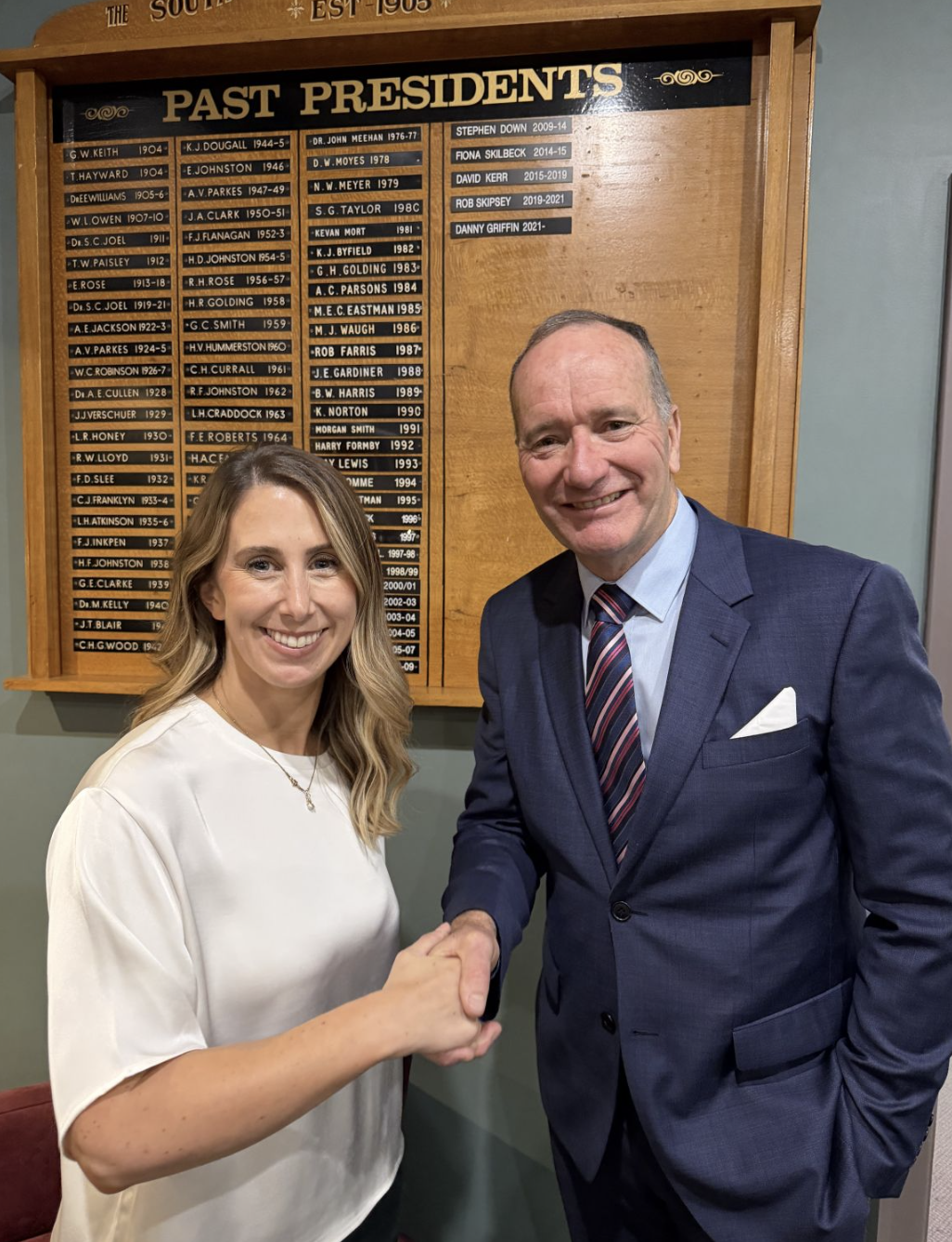
Our AGM also marked a change in leadership, with Danny Griffin officially handing over the Chamber presidency to Kimberly Jones.
Danny has served as President since 2021, leading the organisation through the turbulent period of COVID-19 and helping shape the Chamber into what it is today.
During his time, he supported the introduction and development of several important initiatives, including the South West Leaders program and our portfolio structure for engaging with industry and members.
These portfolios, led by board members, focus on key areas including Aboriginal Engagement, Not-for-Profit Engagement, Women in Business, Young People in Business and our CEO Roundtable. They provide a practical framework for ensuring the Chamber remains connected and accountable to the diverse groups that underpin our business community.
When I joined as CEO a little over a year ago, I was struck by Danny’s enthusiasm for the Chamber and, more importantly, his genuine commitment to the broader community and his vision for a prosperous region for all.
That commitment has been evident throughout his presidency, and I want to thank him on behalf of everyone at Chamber House for his leadership, support and contribution.
Kim brings valuable experience to the role. Having served as Vice President for several years, she understands the Chamber’s work and its members. A lawyer by training, she has particular expertise in employment law and is a familiar face at our events.
I look forward to working with Kim as we continue building on the foundations Danny has helped establish.
Applications open for the 2027 CEO Roundtable
Finally, applications are now open for our 2027 CEO Roundtable.
Entering its third year, the program brings together a small group of senior leaders each month for confidential, considered conversations about the challenges and opportunities facing their organisations, our region and themselves as leaders.
There is an interesting paradox in leadership. Those responsible for some of our region’s largest employers are often the people with the fewest opportunities to step away from the day-to-day demands of their roles, share challenges openly and learn from others who understand the pressures involved.
The Roundtable was established to create that space: an opportunity to connect with peers, challenge thinking, exchange ideas and invest in personal leadership development.
It is also a reminder that strategy and leadership go hand in hand. Sometimes, the most valuable thing a leader can do is step back, listen to others and consider a different perspective.
If you are interested in joining the 2027 CEO Roundtable, please get in touch with me for further information.
As we move towards the end of the year, the challenges facing business are unlikely to disappear overnight. But neither will the opportunities available to those prepared to look for them.
At the Chamber, we will continue working to ensure our members have the connections, information and support they need to navigate the challenges of today while helping create the opportunities of tomorrow.
As always, if there is something you think we should be talking about, I would welcome the conversation.
Sean - ceo@bgcci.com.au
